Direct Attorney Access
Work directly with an attorney responsible for your case.

Georgia Personal Injury Representation
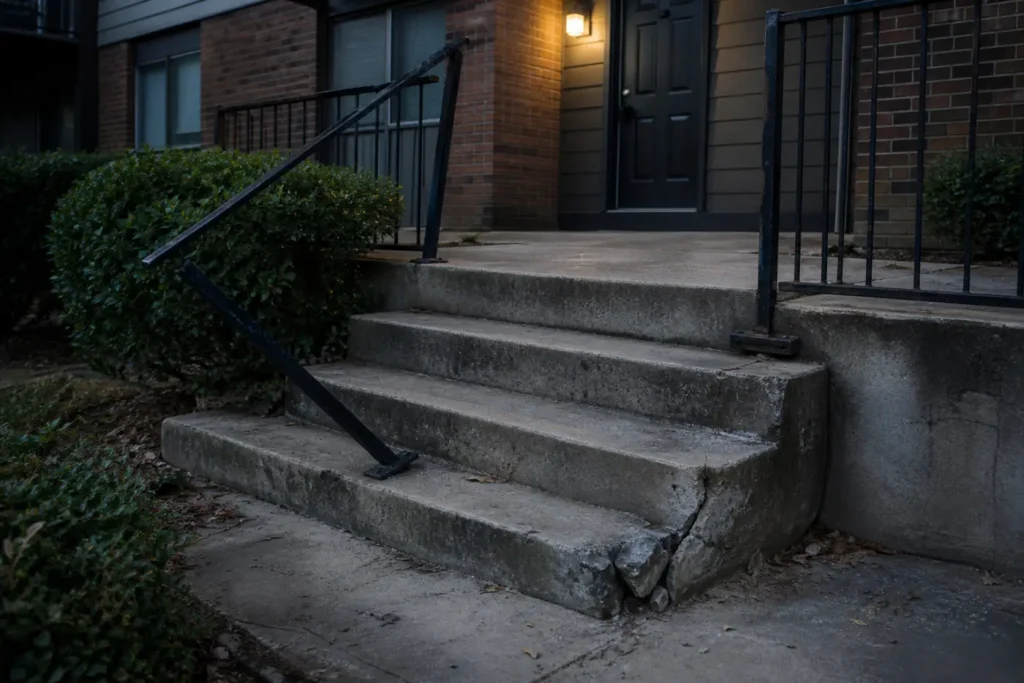
Owners and occupiers of stores, apartments, hotels, parking areas, entertainment venues, and other property must address dangerous conditions within the duties imposed by Georgia law. Serious harm can result from broken stairs, unsafe structures, poor lighting, uncontrolled access, inadequate security, falling objects, and negligent maintenance.
Shield Legal Group investigates who controlled the property, what risks were known or reasonably discoverable, and whether reasonable inspections, maintenance, warnings, or security measures could have prevented the injury.
Work directly with an attorney responsible for your case.
Build the proof before the insurer controls the narrative.
The written agreement explains fees and case expenses.
Why Representation Matters
A property owner, management company, security contractor, or insurer may control surveillance video, access records, incident reports, prior complaints, maintenance files, security assessments, staffing information, and contracts dividing responsibility. Those records can reveal a known problem—but they may not be volunteered to an injured person.
A law firm can identify the responsible entities, issue preservation demands, investigate prior events and property conditions, obtain available public and private records, and develop qualified expert evidence where appropriate. Representation cannot guarantee a result, but it can expose facts that a surface-level insurance review may never address.
Developing the Proof
Evidence depends on the hazard and may include:
Depending on the event and injury, recoverable losses may include:
How We Help
Identify the precise hazard, location, ownership, control, witnesses, and immediate evidence
Preserve video, access, maintenance, complaint, incident, repair, security, and contract records
Investigate notice, prior events, applicable duties, preventability, and every potentially responsible entity
Document causation and damages and prepare the evidence for negotiation or litigation
Protecting the Claim
A condition may be repaired, lighting changed, access data deleted, video overwritten, and witnesses or tenants dispersed. Negligent-security and property-control claims may also require time to identify multiple companies and obtain nonpublic records.
A filing deadline is not the only time concern. Evidence can disappear much sooner. Some Georgia injury claims may be subject to a two-year filing deadline, while exceptions and substantially shorter notice requirements can apply, particularly when a government entity may be involved. An attorney should determine the deadline for the specific facts; this page is general information, not legal advice.
Common Questions
A slip-and-fall is one type of premises-liability claim. Premises liability can also involve negligent security, structural hazards, falling objects, unsafe stairs or railings, poor lighting, animal attacks, and other dangerous property conditions.
Potentially, but not automatically. The analysis may include control of the property, foreseeability, prior similar events, access and lighting conditions, promised or customary security measures, and whether reasonable action could have reduced the risk.
Ownership records, leases, management agreements, maintenance contracts, and security agreements may show which entity controlled the dangerous condition or safety function. More than one party may require investigation.
Tell us where and how the injury occurred. An attorney can evaluate who controlled the property, which records should be preserved, and whether the evidence supports a premises-liability claim.
Free case evaluation. No attorney’s fee unless we recover compensation for you. Results depend on the facts and law applicable to each matter.