Direct Attorney Access
Work directly with an attorney responsible for your case.

Georgia Personal Injury Representation
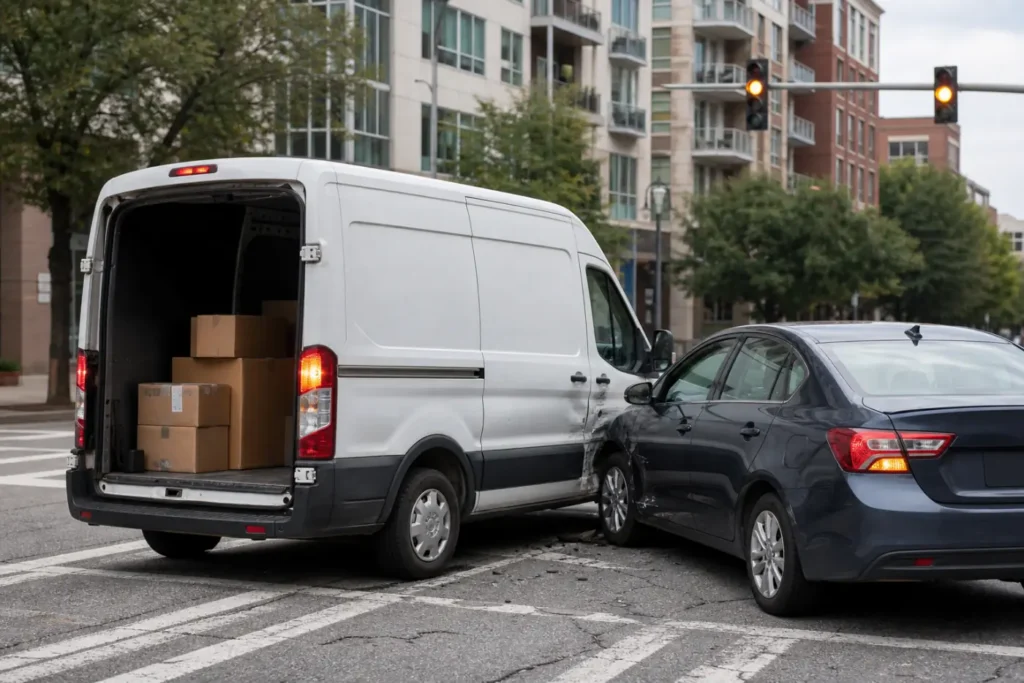
Delivery drivers operate under schedules, routes, app prompts, customer demands, and commercial pressures that can contribute to distraction, speeding, unsafe parking, and hurried driving. After a collision, the driver, vehicle owner, delivery platform, contractor, and insurers may each describe the relationship differently.
Shield Legal Group investigates delivery crashes across Georgia, preserves app and business records, identifies the responsible parties and policies, and documents the full impact of the injury.
Work directly with an attorney responsible for your case.
Build the proof before the insurer controls the narrative.
The written agreement explains fees and case expenses.
Why Representation Matters
A delivery driver may be an employee, contractor, franchise worker, fleet driver, or app-based courier. The vehicle may be personally owned, rented, leased, or provided by another company. Coverage may depend on the driver’s status and activity at the exact time of the collision.
A law firm can preserve delivery assignments, app status, route and GPS data, dispatch messages, telematics, contracts, vehicle records, and commercial policies; then test each company’s description of the relationship against the actual work and control. Representation does not guarantee recovery, but it can prevent a complex commercial claim from being treated as an ordinary personal-policy accident.
Developing the Proof
Depending on the facts, the investigation may involve the driver, employer, contractor, delivery company, platform, fleet or vehicle owner, maintenance provider, or another motorist. Evidence may include:
A delivery-vehicle claim may include:
How We Help
Preserve the driver’s app, delivery, route, dispatch, phone, video, and vehicle data
Investigate the collision, medical causation, and relationship among the driver, vehicle, contractor, and delivery business
Identify every potentially responsible party and layer of personal, commercial, fleet, platform, or uninsured-motorist coverage
Document the losses and prepare a claim that can withstand finger-pointing among companies and insurers
Protecting the Claim
Trip status, route information, dispatch messages, video, telematics, and contractor records may be deleted or overwritten. Prompt preservation also helps establish what work the driver was performing when the crash occurred.
A filing deadline is not the only time concern. Evidence can disappear much sooner. Some Georgia injury claims may be subject to a two-year filing deadline, while exceptions and substantially shorter notice requirements can apply, particularly when a government entity may be involved. An attorney should determine the deadline for the specific facts; this page is general information, not legal advice.
Common Questions
No. Responsibility depends on the driver’s relationship, assigned work, company control, vehicle ownership, and the company’s own conduct. Labels such as independent contractor do not replace a fact-specific analysis.
The answer may depend on the driver, vehicle, platform, employer or contractor relationship, app status, delivery activity, and policy language. Several policies may need to be requested and compared.
Commercial activity can still matter. Delivery bags, packages, app screens, trip records, photographs, witness information, and the driver’s statements may help establish the driver’s activity and identify the business.
Delivery status and app records can determine which businesses and policies must be investigated. Tell us what happened so an attorney can identify the evidence, relationships, and coverage that matter.
Free case evaluation. No attorney’s fee unless we recover compensation for you. Results depend on the facts and law applicable to each matter.